
So the ceiling of achievement. It’s a topic that ends up coming up a lot in the real estate world. I end up hearing a lot about it or seeing it subconsciously manifest itself in people in a lot of different ways.
I think it’s an interesting concept and something to think about. Is there such a thing as a natural ceiling of achievement? You hear stories of people who just work tirelessly and endlessly on something because it’s a passion of theirs. It feels like a purpose, so they just do it.
They just do it and go after it, and they’re successful with it. They’re successful at doing it because they are pursuing a passion and a purpose. On the flip side, you also hear of people who work tirelessly, and it becomes burnout.
I want to just kind of get my thoughts out on what I’ve learned over the years on the natural ceiling of achievement. If it exists, if there’s such a thing as a natural ceiling of achievement, and how to go about it when you encounter one, because the reality is you will encounter a natural ceiling of achievement at some point along your journey.
When that happens, do you confront it, and do you run headfirst at it and do everything you can to break through that ceiling? Or do you say, “Hey, I’m good?” I think that’s maybe the question where most people get stuck, including myself, by the way. I think I got stuck at this on my real estate journey.
First and foremost, I do think people have a natural ceiling of achievement or ability or whatever word you want to use, and they will naturally succeed to a certain level at whatever it is that they’re doing. Very generally, that’s just how we as humans are wired.
Somebody can train their ass off for something, like say somebody’s training to run a mile at a certain pace. They might train their absolute best for months, and maybe they hit a goal pace, and they crush that goal pace. But that goal pace that they had might have just been another run for somebody else who’s more of a professional runner, who gets out there and runs a couple of miles every day. To me, this is what we’re talking about right here.
To be fair, with today’s post, I’m not so much talking about things like running because running, for most people, is exercise. It’s fitness, maybe it’s a hobby, but it’s not a passion, it’s not a purpose, it’s not the reason they get up in the morning. Hey, maybe it is, and no judgment if it is for you, and yet it’s important to make the distinction between everything that we’re talking about. Let’s bring it back to real estate here, bring it back to a professional setting.
I’m talking real estate because that’s what I do for a living. I’m a real estate coach, I’m a real estate broker, and yet this is not just about real estate. If anything, it’s about pursuing a professional goal or a professional endeavor.
I think we’re all going to have some sort of limit to what we will naturally do well and what our abilities end up just kind of showing themselves as. For instance, in real estate, it’s likely going to be selling a certain number of homes every single year. It will be market-dependent in some form or fashion. Meaning if the market’s great, maybe your ceiling is 20 homes a year, and if the market is in the tank, maybe your ceiling is 10 homes. That very well could be the case. It could vary that much, and the environment that you’re in is going to impact your results.
But that doesn’t mean that in those respective examples, 20 in a great market and 10 in a bad market, that doesn’t mean that you can’t sell more than 20 homes or more than 10 homes. It just means you’re going to really have to push and go hard for more.
Let me give you an example in the real estate space. Since I’ve not talked to this person about the example, I am going to just give a fake name and say that this person is named Clancy.
So Clancy and I knew each other prior to real estate. I was in retail management, as I did that as my first job out of college. And Clancy was a route salesman for a vendor for one of the stores that I managed.
Clancy was always super personable. You could just tell Clancy was a natural salesperson. He would come in the door selling his product and was sharp, had a great memory for everything. He was good at cutting up on some things. He was just a natural salesperson.
And I left my retail job a few years later, and I was working at Keller Williams when I was holding a buyer’s consultation at the office. And lo and behold, I show up and I get to the office, and Clancy is there at the front desk. He had just gotten his real estate license, had just started, and was doing some front desk work, kind of learning the office and everything real estate.
And I could tell immediately, I was like, I know Clancy is going to succeed at this. Clancy is going to rock at real estate. And sure enough, Clancy has done very well for himself. Clancy has a very high natural ceiling of achievement when it comes to sales.
Now, I don’t know what Clancy’s work habits look like. And so I’m not going to say anything about whether or not that stuff just comes easy to him or if he is grinding away every day for four hours a day on the phones to hit the success levels that he’s hitting. I don’t know that answer. And so I’m not going to judge. But I guess my point is, I could tell as soon as I saw Clancy again, I was like, man, he is going to rock at real estate here. And he has, because he has that natural ability, that natural sales ability.
But that doesn’t mean you need that to succeed in this business. I really don’t think you do. But I think you do either need to have that to succeed, or you need to feel like real estate is a purpose, a reason for being, for going, for doing, to have those results that you might want to get.
And so I’ll give you another example here. More of a purpose for me, anyway. And that purpose is music.
I love music. I love music to no end. Music and family are right next to each other in my book.
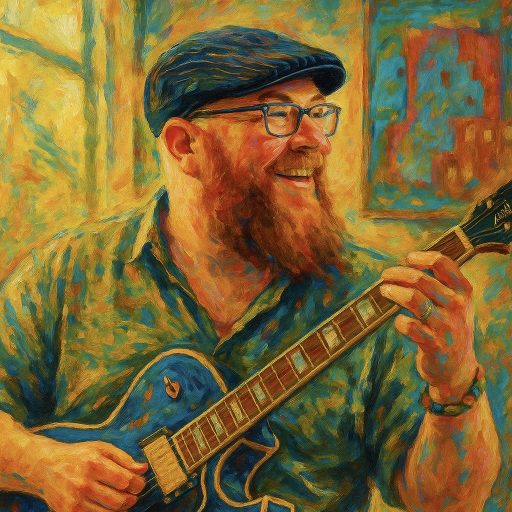
As a musician, I’ve got a pretty good natural ceiling. For years, I was self-taught and didn’t take lessons other than some things I learned online. I could definitely hold my own. And yet, there was definitely a natural level to what I’d be able to achieve by doing that. I had to take a step back and self-analyze and say, “Hey, this is something I love. I want to get better at it. I don’t really care what it ends up becoming, meaning if I end up selling 100 million records and music ends up becoming something that is a financial windfall for me, great. If I end up having eight Spotify listeners a month, hey, great. Either way is fine. I just love music. And I want to create and I want to get better at it.”
Because of that, it has been a constant and never-ending journey of growth for me on the music side. Whether it’s learning to produce my own music in a little bit of a better light or to become a better player. I want to be more versatile and play the music I want to play. All of that has led to having better systems, having better tools, learning more, and obtaining more knowledge.
And that’s what it takes to break through that natural ceiling of achievement or natural ceiling of accomplishment, basically, your natural ability. I think there’s a pretty big difference, though, between what real estate is for most people and what music is for me. Meaning, music feels like a purpose to me. Music feels like something that, if I’m living out my days playing music, writing music, doing everything I can to create in this space, then that’s still a life well-lived. That’s a life that I want to pursue and go after, a life that feels fulfilling. Versus in real estate, it’s a means, a means to earn income. It’s a way to put food on the table, to put gas in the tank, to put a roof over the head. But it is not, by any means, a purpose. It’s a job.
To me, that’s the difference. To me, the difference is one’s a purpose, one’s a job. And we have to identify how much effort we want to put into growth in our job in order not to sacrifice our time to go after more of the purpose in life.
And it’s a slippery slope because most things aren’t going to be second nature to us. To some of us, maybe they will. Some of us might just have an immense natural ability to do a lot of things.
Maybe it will feel that way. A job might feel that way. However, you might have to grind away at a job to experience the financial success that you’re looking for. And that just is what it is to an extent. But at the same time, the grind, you’ve got to make sure that grind is something that’s leading you toward what you want.
This is where I see real estate agents get lost constantly, because I’ll see real estate agents who are going after more. After all, that’s all they know. They think, “I’m being told to grow. I’m being told to get better. I’m being told to take my sales goal and double it. I’m being told to take what I did last year and add 25% and that’s my goal for next year.”
And they’re doing that instead of looking at things and saying, “What is it that I actually want to get out of life?’
Let’s use that example of an agent who might have a purpose like music that’s burning inside them. Like for me, music, I know music as I sit here right now in November of 2025, that music is not something that’s going to put a ton of money in my bank account anytime soon. I can book some gigs, and I can make a little bit of money here and there, which is great because I’d much rather make money playing music than not make money playing music. But I’d also rather play music for free than not play music at all, if that makes sense.
So, as somebody who knows that music is not something that’s going to bring a financial windfall today, I know I have to have income coming in from a J-O-B, from a job, and that’s fine. And yet what I think we need to do is find that balance between getting better at what we do on an everyday basis, while also not giving away all of our time and all of our energy just for that job. That ultimately ends up being what most of the problem is: we see a job, we see something that we’re doing, and we want to get better, we want to make more money.
So instead of working as little as we can to make the money that we need to make to pursue what it is that we actually care about, what ends up being the case is that we end up putting a lot of time into that job. We attend CE, we attend classes, we work extra hours, and then all of a sudden, we don’t have time for the things that actually energize us and the things that we care about.
And it’s because we’re trying to break through that natural ceiling at something that is ultimately unimportant to us.
We’re looking at things and saying, well, let’s say my natural ceiling is for a down market. Say it’s selling 10 homes in a year. Can I get by selling 10 homes? Maybe, maybe not. Depends on what the commission is and what I’m actually earning from it. But, if that’s my natural ceiling, somewhere around 10 homes for a down market, can I build a business plan that’s not just draining money from my bank account so that I can have a profitable business, make good money doing that, and then turn around and spend my extra time going after the things that I care about? Can I create that business plan?
That’s what gets lost in the eyes of most real estate agents. They see more. They want more. They see an agent like Clancy who’s out there who’s crushing it, and they start measuring themselves up against Clancy. And they start saying, “All right, Clancy, he just makes this look so easy, and he’s selling five homes a month. He’s selling 60 homes a year, and he just makes this look like it’s, you know, so natural. I need to get better. I need to do that. I can sell five homes a month.” Like, that’s what people start saying. But if somebody’s natural ceiling of achievement is 10 to 20 homes in a year, and they want to sell 60, they could do it.
It’s going to take some real effort, some real growth, some real grind, some real energy, some real work, to hit that number. And it’s going to take a lot more than 40 hours a week, probably take double that, at least, just to get to where they want to be. And either that or putting a lot of money into it and not making the money that you want to make. Which, at that point, if you’re selling 60 homes, but you’re making the same amount as what you’d make if you sold 10, why are you selling 60?
When it all boils down, I’m just trying to get at the fact that we end up going after more typically because we don’t recognize our own natural abilities and our own natural ceiling. And, a natural ceiling is not a bad thing. It’s almost like admitting “this is where I’m going to rise to in this endeavor.” It doesn’t mean you can’t naturally rise in this endeavor. And it doesn’t mean you can’t get better. It doesn’t mean you can’t do more if you really put your mind to it.
I’m not trying to tell people to impose limits on themselves. Far from it. I think people should never impose limits on themselves, but rather they should go after whatever it is that sets their soul on fire, what sets their heart on fire. Like if your job sets your soul on fire, go after it. I just know that for most people, if they’re really being honest with themselves, it’s just a job.
Maybe it’s a job you enjoy. And that’s awesome if it’s a job you enjoy. But if it’s just a job that you enjoy, it’s just a job. And that’s just all it is. And that’s okay if that’s all it is. But, if that’s all it is, understand the trade-offs that you’re making.
If you’re spending way too much time in the real estate industry going after more, going after selling more, you’re doing that instead of going after more purpose, going after more family, going after more of what really lights you up. This is a trade-off. And the trade-off starts with understanding your natural ability, your natural ceiling, and going from there.
What I want to encourage everybody to do is if you’re in the real estate space and you’re reading these words, head over to realestatereset.org. You can get on my calendar for a free 30-minute strategy session. I’d love to see if we can make it to where your goals align with what you actually want to get out of life and figure all this out together. I’d love to see if we could just figure all this out for you.
I want to encourage everybody out there to go out there and live their best life. Truly live a life in which you are irreplaceable.
 Rob Foglia
Leave a comment